

What’s Really Inside the Candles We Burn?
Hi friends,
Yesterday I came across something that honestly made me pause and think more carefully about something many of us use almost every day: candles.
For years, like many people, I bought candles from well-known stores without giving much thought to what went into them. They smelled nice, they made a room feel cozy, and they were easy to grab during seasonal sales. I used to buy candles from places like Bath & Body Works too. In fact, I probably burned hundreds of them before I ever started making candles myself.
At the time, I never thought much about ingredients. Most of us don’t. Candles are often seen as simple home items, something that adds atmosphere to a space. We light them while relaxing, reading, having dinner, or unwinding at the end of the day. They feel harmless and familiar.
But recently, while looking more closely at the ingredient information for a popular candle formula, something caught my attention.
Several ingredients listed were stabilizers.
That discovery didn’t immediately mean anything was wrong. Stabilizers are used in many manufactured products. But it did lead me to ask a question that I had never asked before.
Why are stabilizers used in candles in the first place?
Navigate this easily:
Understanding How Large-Scale Candle Formulas Work
To understand this better, it helps to know a little about how candles are produced at scale.
In large candle manufacturing, formulas are carefully engineered to achieve specific results. Companies want candles that smell strong, burn consistently, remain stable on store shelves, and perform the same way across thousands or even millions of units.
To achieve this, manufacturers often rely on a combination of fragrance oils, wax blends, and supporting ingredients that help control how the candle behaves.
This is where stabilizers sometimes enter the formula.
Stabilizers can help fragrance compounds remain consistent when exposed to heat. They can also help maintain scent performance during long storage periods. In other industries, similar compounds are used in materials like coatings, adhesives, and certain industrial products because they help maintain stability under different conditions.
In candle manufacturing, their role can be practical. They help manufacturers control how fragrance behaves inside the wax without needing to increase the amount of fragrance oil in the formula.
And fragrance oils, especially high-quality ones, are often one of the most expensive components of a candle.
This doesn’t automatically make stabilizers harmful or unusual. It simply reflects how large-scale production systems are designed to balance performance, cost, and consistency.
But learning about this made me stop and ask a simple question.
Why Stabilizers Are Sometimes Used In Candles?
In large-scale candle manufacturing, stabilizers are often used to help control how fragrance behaves under heat and over time.
They can support scent consistency, improve shelf stability, and help ensure that each candle performs the same way from the first burn to the last. In many ways, they are a practical solution for producing candles at scale, where consistency and longevity are key priorities.
Their presence in a formula doesn’t automatically mean something is wrong. It simply reflects a different approach to formulation, one that prioritizes performance and uniformity across large volumes.
At the same time, learning about stabilizers led us to ask a simple question:
Do We Actually Need Stabilizers to Make a Good Candle?
The more I thought about it, the more I realized that candle making can be approached in different ways.
Large manufacturing operations optimize for consistency across massive volumes. That requires a certain type of formulation strategy.
But smaller candle makers often have the flexibility to take a different path.
Instead of engineering formulas around stabilizers and performance additives, some makers choose to focus on ingredient simplicity and scent composition.
That difference in philosophy is what ultimately led me to start asking deeper questions about how candles are made.
A Different Way to Think About Candle Ingredients
When we started developing candles at Living Good Candle Co., one of the guiding ideas was simple: focus on ingredients that come directly from nature whenever possible.
This meant prioritizing components like essential oils, plant absolutes, and natural isolates. These materials come from botanical sources and are widely used in fine fragrance and perfumery.
Essential oils bring the complex scent profiles found naturally in plants. Absolutes capture aromatic compounds from delicate flowers and botanicals that cannot easily be distilled. Natural isolates allow perfumers to refine individual plant-derived aroma molecules to shape scent structure more precisely.
Together, these ingredients allow for layered, balanced fragrances without relying on stabilizers or additional additives.
It also means that candle formulation stays relatively straightforward.
Rather than building performance through multiple chemical supports, the focus shifts toward the quality of the fragrance materials themselves.
Why Simplicity Matters in Small-Batch Candle Making
When candles are made in smaller batches, makers can play closer attention to how ingredients behave together.
Wax choice, fragrance composition, wick selection, and burn temperature all influence how a candle performs. Instead of relying on stabilizers to manage those variables, candle makers can fine-tune the balance between these elements.
For example, natural waxes such as beeswax burn differently than many synthetic wax blends. They interact with fragrance oils in their own unique way. This requires careful testing and formulation to ensure the scent unfolds gently and consistently as the candle burns.
It may take more experimentation, but it allows the final product to remain close to its original ingredients.
For some makers, that extra effort feels worthwhile.
Why Ingredients Transparency Matters
One thing that stood out to me during this experience was how little most of us know about the everyday items we bring into our homes.
Candles are a good example.
Because they feel simple and familiar, we rarely stop to think about how they’re formulated or what their ingredient lists contain. Many companies do not publish full ingredient disclosures, and when they do, the terminology can be difficult to interpret.
That doesn’t mean candles are unsafe or unproblematic. It simply means there is room for more transparency and understanding.
When consumers know what goes into a product, they can make decisions based on their own preferences and comfort levels.
Some people prioritize strong scent throw above everything else. Others care more about ingredient simplicity. Some people want a balance of both.
The important thing is having enough information to choose intentionally.
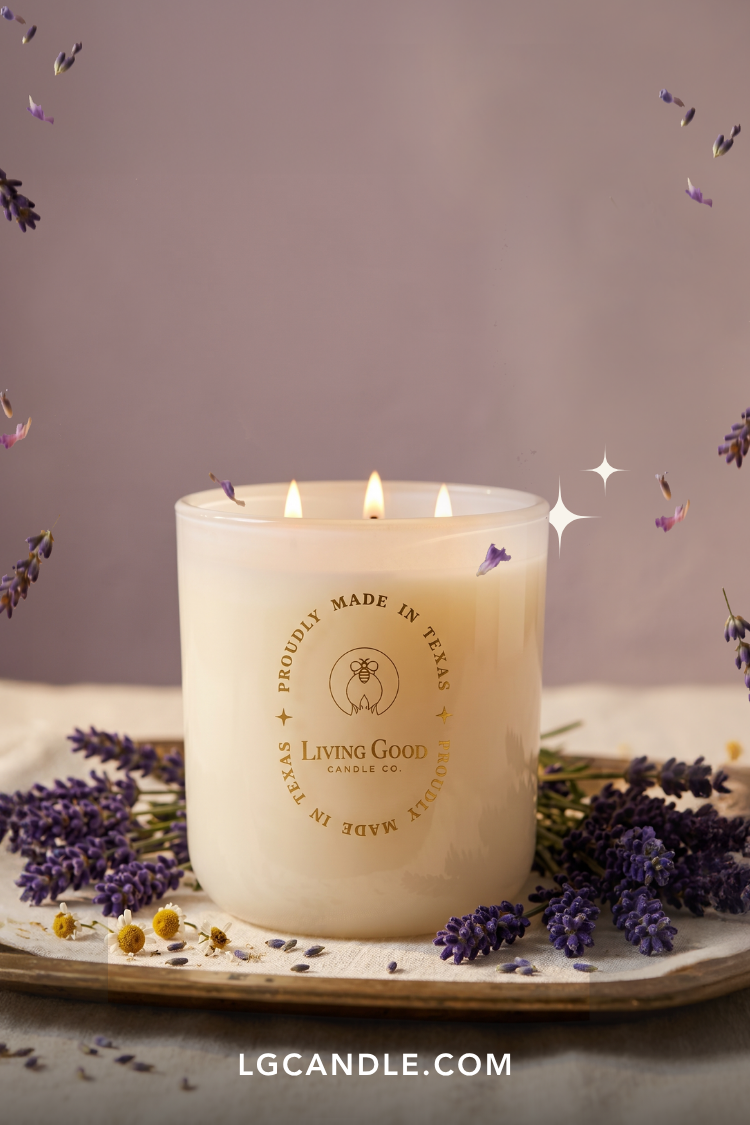
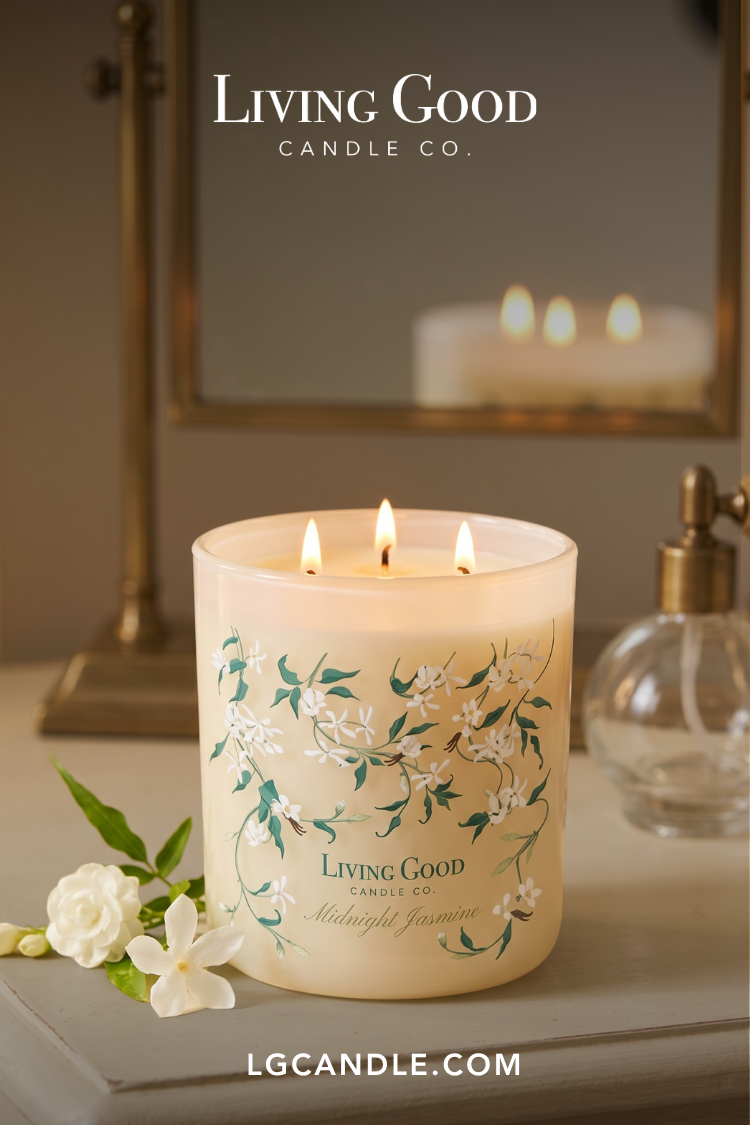
The Approach at Living Good Candle Co.
At Living Good Candle Co., we chose to take a different path. Rather than building our formulas around additional stabilizing ingredients, we focus on the balance between wax, wick, and fragrance composition itself. By working with essential oils, botanical absolutes, and natural isolates, we’re able to create layered scents that perform gently and consistently without relying on extra additives.
This approach requires more testing and a deeper understanding of how each ingredient behaves, but it allows us to keep our formulas simpler and closer to their original sources.
The goal isn’t to maximize intensity or extend shelf life as far as possible. It’s to create a candle that feels calm, intentional, and comfortable to burn in your everyday space.
A Simple Thought to End With
I’m not sharing this to tell anyone what they should or shouldn’t buy.
Many people enjoy candles from large retailers, and there is nothing inherently wrong with that. Those companies operate on a scale that requires different production methods.
But learning more about candle ingredients made me realize how valuable it is to simply understand what we bring into our homes.
Candles are part of quiet moments. They’re lit during dinners, evenings of relaxation, conversations with friends, and time spent unwinding after long days.
Because they’re so closely connected to our living spaces, it feels reasonable to ask questions about how they’re made.
And sometimes, asking those questions leads us to appreciate the craft behind simpler, more intentional candles even more.