
Clean Burning Candles: What Makes a Candle Burn Clean
Table of Contents
- What “clean burning” actually means
- Soot: the biggest sign a candle isn’t burning clean
- What causes soot in the first place
- Why beeswax has a reputation for burning clean
- What else affects a clean burn
- How we approach it
“Clean burning” shows up on candle labels almost as often as “natural,” and it’s just as loosely defined. There’s no certification behind it. It’s a phrase brands use to describe a candle that burns without excess smoke, soot, or a heavy, chemical-feeling smell. Whether that’s true depends on the wax, the wick, and how the candle is actually made, not the label.
Here’s the direct answer: a clean burning candle is one that burns with a small, steady flame, produces little to no visible soot, and doesn’t leave a black ring on the jar. Beeswax tends to do this well because of the wax itself, but it isn’t automatic. A poorly sized wick or wax additives can undercut even a naturally clean-burning wax.
What “Clean Burning” Actually Means
When someone searches for clean burning candles, they’re usually trying to avoid two specific things: the black soot that collects on the jar or a nearby wall, and a heavy, synthetic smell that lingers after the candle is blown out. Neither is really about air quality science. Both are things you can see and smell for yourself.
A candle that burns clean will have a flame that stays roughly the same size throughout the burn, without flickering, dancing, or throwing off small wisps of black smoke. The wax pool should be relatively clear, not clouded or full of floating debris.
Soot: The Biggest Sign a Candle Isn’t Burning Clean
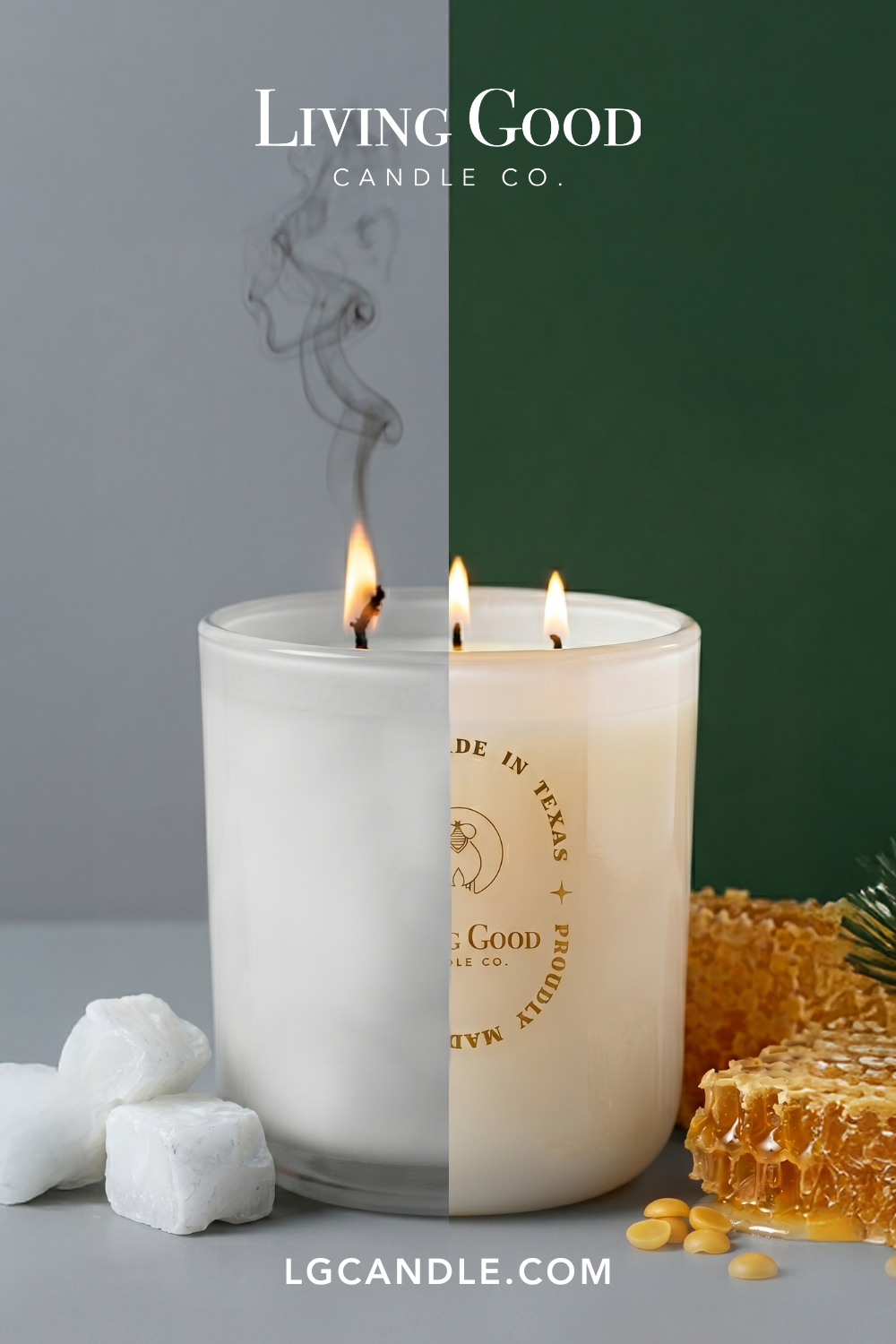
Soot is unburned carbon. It happens when a candle isn’t getting enough oxygen to fully combust the wax and fragrance vapor. That excess carbon rises with the heat and either floats off as visible smoke or settles as a black film on the inside of the glass.
A little soot after blowing out a candle is normal for almost any wax type. The concern is a candle that soots heavily while it’s still burning, not just at extinguishing.
What Causes Soot in the First Place
A few factors drive most sooting issues:
Wick Size Mismatched to the Wax and Container
A wick that’s too large for the jar burns hotter than it needs to, and the excess heat is what tends to overload the flame with more fuel than it can cleanly burn.
Fragrance Load
Candles pushed to hold as much fragrance oil as possible often burn less cleanly, because the wax has to vaporize more material than it was really designed to carry.
Drafts
Even a well-made candle will soot if it’s burning near an open window, a fan, or an HVAC vent. The flickering flame from moving air is a major, and often overlooked, cause of soot that has nothing to do with the candle itself.
Wick Maintenance
A wick that’s grown too long between burns creates a larger, uneven flame. Trimming it before each burn is one of the simplest ways to reduce soot regardless of wax type.
Why Beeswax Has a Reputation for Burning Clean
Beeswax is dense and burns at a naturally slower rate than soy or paraffin. That density is part of why beeswax has long been associated with a cleaner burn: there’s less excess wax vapor being pushed through the flame at once.
Beeswax also doesn’t typically need heavy fragrance loading to carry scent, since it has a naturally faint, honey-like smell of its own. That’s part of why we scent with Plant Based Oils at a lighter load rather than a heavy synthetic fragrance blend. A lighter fragrance load, on top of a slower-burning wax, gives the flame less to fully combust at once.
What Else Affects a Clean Burn
Wax and wick are the biggest factors, but a few habits on the burning side matter too:
- Trim the wick to about a quarter inch before each burn.
- Keep the candle away from drafts, vents, and fans.
- Let the wax pool reach the edge of the container on the first burn, so the candle doesn’t develop a narrow “tunnel” that burns unevenly later on.
- Avoid burning a candle for so long that the wick curls or mushrooms at the tip, since a mushroomed wick is a common soot source.
How We Approach It
Our candles start from beeswax blended with non-GMO coconut oil, which is there to help the wax burn more smoothly and evenly, and our wicks are cotton, lead-free, and zinc-free. We scent with Plant Based Oils rather than a heavy synthetic fragrance load.
We’re not going to claim our candles purify the air or promise a completely soot-free burn under any condition. What we can tell you honestly is what’s in the wax, what’s in the wick, and what tends to affect how cleanly any candle burns, ours included.
If you’re deciding between wax types more broadly, our beeswax vs. soy vs. paraffin comparison goes deeper on that.
And if you want to see the wick and wax up close, our 1-Wick collection and 3-Wick collection are a good place to start.