
Natural Candles: What the Word means on a Candle Label
- What “natural” actually means on a candle
- Why the word gets used so loosely
- Natural candle wax types: beeswax, soy, and coconut
- What’s inside a natural candle besides the wax
- How to tell if a candle is actually natural
- What’s in our candles
“Natural” is one of the most common words on a candle label, and one of the least defined. There’s no government standard that says what a candle has to contain to use it. That means the word can mean almost anything, from a candle that’s genuinely plant-based front to back, to one that’s 10% natural wax and 90% something else with a leaf drawn on the label.
Here’s the direct answer: a candle is only as natural as its wax, its wick, and what scents it. All three have to hold up, not just one.
What “Natural” Actually Means on a Candle
When people search for natural candles, they’re usually asking one of two things: is this candle made from plant- or animal-based materials instead of petroleum, and is it something they’d feel comfortable burning regularly in their home.
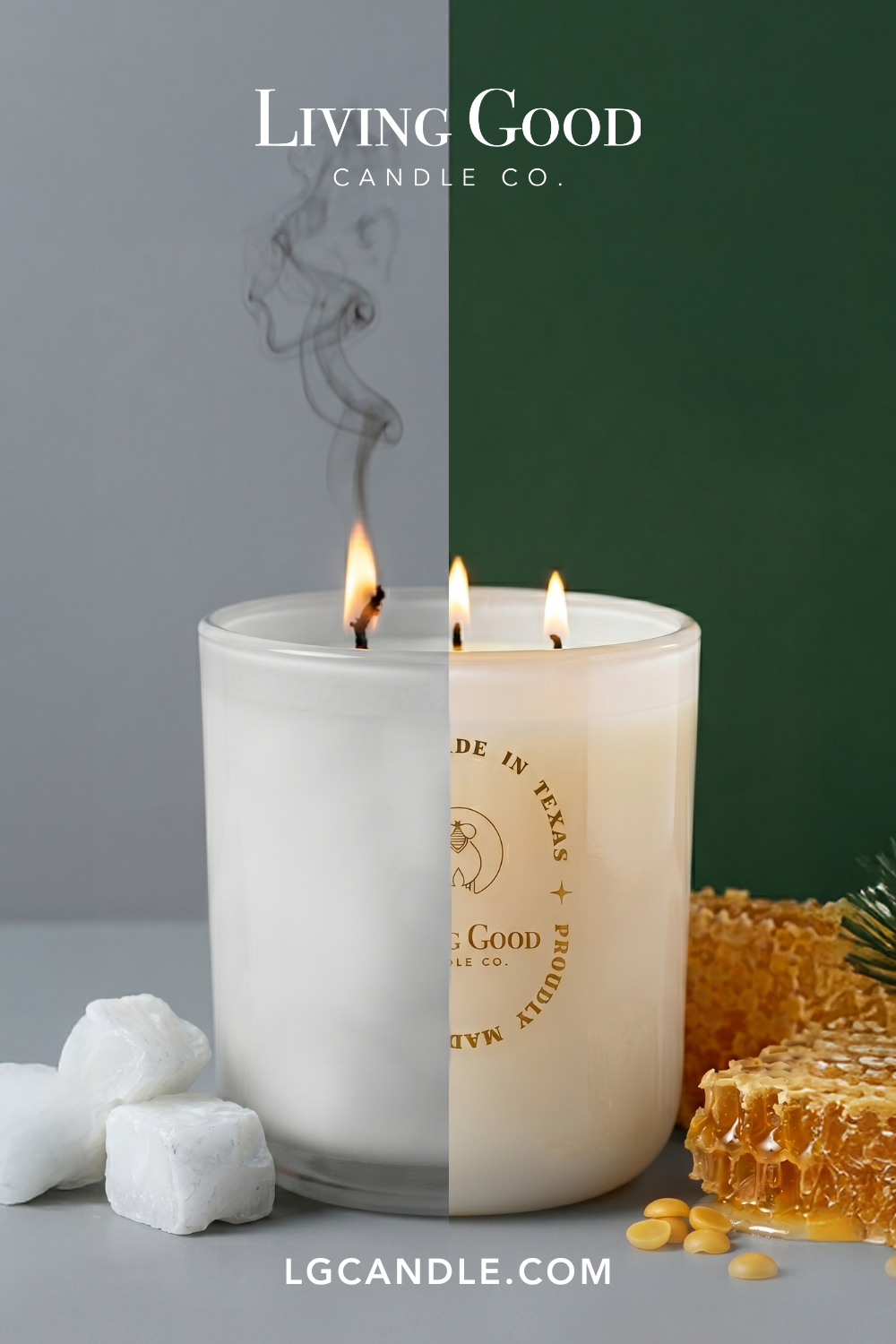
The wax is the biggest factor. Paraffin wax is a petroleum byproduct, so a candle made from it isn’t natural no matter what else is inside it. Soy, coconut, and beeswax are all naturally derived starting points.
But “natural wax” doesn’t automatically mean “100% that wax.” A lot of candles blend a small amount of natural wax into a mostly paraffin base and still call the finished product natural.
Why the Word Gets Used So Loosely
Part of the reason “natural” shows up on almost every candle shelf is that it’s not a regulated claim. Unlike “organic,” which has legal requirements behind it, “natural” is closer to a marketing choice than a certification.
That’s exactly why we don’t use the word “organic” on our own labels. We can tell you what’s in a candle. We can’t certify it as organic, so we don’t claim it.
This is also where it helps to separate two different questions: is the wax natural, and is the fragrance natural? A candle can lead with “natural soy wax” on the front of the label and still be scented with a synthetic fragrance oil made in a lab. Both halves matter.
Natural Candle Wax Types: Beeswax, Soy Wax, and Coconut Wax Explained
When people search for natural candle wax, they're usually trying to answer a pretty straightforward question: which candle waxes come from natural sources, and does that make them a better choice?
The answer starts with where the wax comes from. But that's not the whole story.
Beeswax, soy wax, and coconut wax all begin with naturally derived materials. They don't all go through the same processing, though, and the fact that a wax starts with a natural ingredient doesn't automatically tell you everything about the finished candle.
Here's how the three compare.
Beeswax: A Wax Made by Honeybees
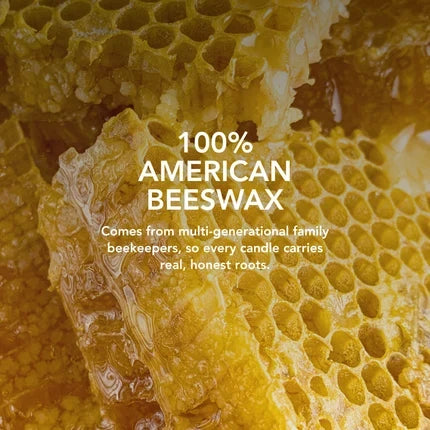
Beeswax is produced by honeybees, not synthesized. It's one of the oldest candle waxes in use, long before paraffin existed.
It's an animal-derived wax rather than a plant-derived one, but it's still a naturally occurring material.
Once collected, beeswax is typically melted and filtered to remove debris and other impurities. The amount of additional processing depends on the supplier and the intended use.
Beeswax has its own natural color and mild honey-like aroma, although both can vary depending on its source and how it's processed.
On its own, beeswax can be challenging to formulate for a consistent burn, which is why some beeswax candles blend in another ingredient to help achieve the desired burning characteristics.
Our Bare Beeswax candle is beeswax blended with non-GMO coconut oil, not coconut wax. The coconut oil is there to help the wax burn more smoothly and evenly, not to bulk up the wax with something cheaper.
Because beeswax is a natural material harvested by bees, its color can vary slightly from batch to batch depending on the season it was collected. That's normal, not a quality issue.
Soy Wax: A Plant-Derived Candle Wax
Soy wax begins with soybeans. Oil is extracted from the beans and then processed to create a wax suitable for candle making.
One common step is hydrogenation, which changes the oil's physical properties so it can become more solid at room temperature.
That means soy wax is plant-derived, but it isn't simply soybean oil poured into a candle jar.
The amount and type of processing can vary, and some soy candle formulations include additional waxes or additives.
If a candle is labeled as a soy candle, it's worth checking whether the brand discloses the full wax blend rather than assuming every ingredient comes from soybeans.
Coconut Wax: Another Plant-Derived Option
Coconut wax starts with oil extracted from coconuts. Like soy wax, coconut oil typically needs further processing to achieve the consistency used in candle making.
Coconut-derived wax is often blended with other waxes to achieve the desired firmness and burning characteristics.
This is an important distinction because a candle described as a coconut wax candle may not be made entirely from coconut-derived ingredients.
Coconut oil and coconut wax also aren't necessarily interchangeable. The exact ingredient and its role in a candle formulation matter.
We use coconut oil alongside beeswax, rather than describing our candles as pure coconut wax candles.
How Do Natural Candle Wax Types Compare?
Here's a simple breakdown of the most common candle natural wax types and where they come from.
| Wax Type | Natural Source | What to Know |
|---|---|---|
| Beeswax | Produced by honeybees | Naturally occurring wax that is typically melted and filtered before candle making. |
| Soy wax | Oil extracted from soybeans | Plant-derived oil that undergoes processing to become candle wax. |
| Coconut wax | Oil extracted from coconuts | Plant-derived wax that is often blended with other waxes. |
All three have naturally derived starting materials. What makes them different is their source, processing, and how they're used in a finished candle.
And none of those details, on their own, tells you whether every other ingredient in the candle is natural.
Does Natural Candle Wax Mean the Whole Candle Is Natural?
Not necessarily.
Wax is only one part of a candle. Fragrance ingredients, wicks, colorants, and other additives can also be part of the finished product.
A candle can use naturally derived wax while containing synthetic fragrance ingredients. Another candle might use a blend of different naturally derived waxes. Neither situation can be understood from the wax name alone.
That's why the most useful question isn't simply, "Is this natural candle wax?"
It's also, "What else is in the candle, and what does the brand actually disclose?"
That's the distinction we think matters most. A clear ingredient explanation is more useful than a broad label that leaves those questions unanswered.
What’s Inside a Natural Candle Besides the Wax
Wax gets most of the attention, but two other parts matter just as much:
The Wick
A wick can be cotton, wood, or a cored wick with a metal center. Lead-core wicks were phased out of the market years ago, but zinc-core and other metal-core wicks are still around, so it’s worth checking what a wick is made of, not just assuming.
The Fragrance
This is where the word “natural” gets stretched the furthest. A lot of candles labeled natural still use synthetic fragrance oils, because synthetic fragrance is cheaper and throws scent more strongly than most natural aromatic ingredients.
We scent our candles with what we call Plant Based Oils rather than a synthetic fragrance load, which is part of why our scents tend to be closer to true to life, but lighter in throw than a heavily synthetic candle.
How to Tell If a Candle Is Actually Natural
A few questions cut through most of the marketing noise:
- What is the wax, specifically, not just “natural wax” as a category?
- Is it blended, and if so, with what?
- What scents it: a named fragrance oil, or specific plant-based ingredients?
- What is the wick made of?
If a label can’t answer these plainly, that’s usually the answer in itself.
What’s in Our Candles
Every candle we make starts from beeswax, most blended with non-GMO coconut oil to help it burn evenly. We scent with Plant Based Oils, and we list the actual aromatic ingredients rather than a generic “fragrance” label.
We’re not going to tell you every other brand is doing it wrong. We’d rather just be specific about what’s in ours, so you can compare that against anything else you’re looking at.
If you’re comparing wax types more broadly, not just what “natural” means but how beeswax stacks up against soy and paraffin directly, that comparison lives here.
And if you want to see what a Plant Based Oil-scented beeswax candle actually looks like, our collection is here.