
Non-Toxic Candles: How to Tell What Is Actually in Your Candle
“Non-toxic” is one of those phrases that shows up everywhere in the candle aisle now. Non-toxic wax. Clean fragrance. Natural ingredients. Safe burn.
The problem is that those words don’t always explain what is actually inside the candle.
For anyone searching for non toxic candles, the most useful step is not simply looking for one particular phrase on the front of the label. Look at the wax. Look at what creates the scent. Look at the wick. And pay attention to what the company is willing to disclose without making customers dig for basic ingredient information.
At Living Good Candle Co., ingredient transparency is considered more useful than a vague “clean” label. Here is what shoppers should actually look for.
What Does “Non-Toxic Candle” Actually Mean?
There isn’t one ingredient list that automatically turns into a “non-toxic candle.” The phrase also shouldn’t be treated as shorthand for “this candle produces absolutely nothing when it burns.”
A burning candle is still combustion. Wax is heated, fragrance is released, and a flame produces emissions. What matters is what the candle starts with and what is added before it is lit.
When evaluating non toxic candles, the better questions are:
- What is the wax made from?
- Is the wax blended with anything else?
- What creates the fragrance?
- Are dyes or other additives used?
- What is the wick made from?
- Does the company disclose these things?
Those answers provide more useful information than a label alone.
For a deeper discussion about emissions, indoor air quality, pets, sensitivities, and beeswax, see Are Beeswax Candles Safe?
Start With the Wax
Wax makes up most of a candle, so it is the logical place to start.
Paraffin
Paraffin is derived from petroleum refining and is widely used in candle making.
That does not mean every paraffin candle is automatically dangerous. It does mean that shoppers trying to reduce petroleum-derived ingredients in the home may prefer a different type of wax.
Understanding the source of the wax is more useful than assuming that one candle is automatically “safe” or “unsafe” based on a single ingredient.
Soy
Soy wax is plant-derived and renewable, which is one reason it has become a common alternative to paraffin.
However, “soy candle” does not necessarily mean 100% soy. Some candles use soy blends, and a blend is not inherently a problem when the manufacturer clearly explains what it contains.
The important distinction is transparency.
A customer should be able to determine whether the candle contains pure soy wax, a soy-based blend, or another combination of waxes before purchasing it.
Beeswax
Beeswax is produced naturally by honeybees to build their hives. But a candle labeled “beeswax” may still contain pure beeswax or a blend of several ingredients.
Living Good Candle Co. candles are a good example.
Living Good Candle Co. uses real beeswax blended with non-GMO coconut oil. Coconut oil helps support the desired burn performance and scent throw. The full wax composition is disclosed rather than presenting the candle as something it is not.
For more information about pure beeswax, beeswax blends, and the questions that matter when shopping, see the Beeswax Candles Buying Guide.
Fragrance Is Just as Important as Wax
Fragrance is one of the areas where candle ingredient information can become surprisingly vague.
A product label may simply say:
Fragrance.
And that may be the only explanation provided.
The word describes what the ingredient does, but it does not necessarily explain what the fragrance is made from.
Candle scents can be created using traditional synthetic fragrance oils, essential oils, botanical extracts, natural isolates, absolutes, and combinations of different aromatic materials.
Even the term “natural fragrance” offers limited information when a company does not explain what it actually means.
Living Good Candle Co. scented candles use Plant Based Oils, a blend built from plant-derived aromatic materials rather than traditional synthetic fragrance oils.
The distinction is important, but transparency is even more important.
Regardless of the candle brand, shoppers should be able to find a reasonable explanation of what produces the scent. A phrase such as “clean fragrance” should not require blind trust.
Natural Does Not Automatically Mean Safe for Everyone
Something being plant-derived does not mean every person—or every pet—will respond to it in the same way.
Someone with a known fragrance sensitivity, allergy, asthma trigger, or sensitivity to a particular botanical should still pay attention to the ingredients being used, even when those ingredients come from plants.
Pets may have different sensitivities as well. Choosing beeswax does not eliminate the need for reasonable ventilation, appropriate placement, and responsible candle burning.
That is why specific ingredient information is more useful than blanket promises.
A company can explain exactly what goes into a candle while still acknowledging that individual sensitivities and circumstances vary.
Look Beyond the Wax and Fragrance
Wax receives most of the attention, but a candle is more than wax.
When evaluating nontoxic candles, shoppers should consider the candle’s overall construction rather than focusing on one ingredient.
The Wick
Find out what the wick is made from.
The manufacturer should be able to provide that information. Wick size and candle care matter as well because an oversized, untrimmed, or unstable flame can create unnecessary soot regardless of the type of wax being used.
Keeping the wick properly trimmed and placing the candle away from drafts can help maintain a steadier flame.
Responsible burning habits still matter even when a candle is made with thoughtfully selected ingredients.
Dyes and Other Additives
A brightly colored candle is not automatically a bad candle.
However, shoppers interested in minimizing unnecessary additives may want to determine whether dyes, colorants, or other ingredients have been added.
Some candle formulations include additives designed to change hardness, appearance, fragrance performance, adhesion, or burn behavior. Their presence does not automatically mean that a candle is dangerous.
The more important issue is disclosure.
Customers should be able to understand what they are purchasing rather than having to guess what may be hidden behind broad marketing terms.
How to Tell If a Candle Company Is Being Transparent
Evaluating a candle should not require a chemistry degree.
Five questions can reveal a lot:
-
What wax is used?
The answer should be more specific than “natural wax.”
-
Is it a pure wax or a blend?
A blend is not automatically a problem. Lack of transparency about the blend creates more uncertainty.
-
What creates the fragrance?
Look for information beyond broad descriptions such as “premium fragrance” or “clean scent.”
-
Are additional dyes or additives used?
Customers who care about these ingredients should be able to find a clear answer.
-
Is this information easy to find before purchasing?
A company that emphasizes ingredient transparency should make basic product information accessible without requiring multiple emails or extensive research.
The Beeswax Candles Buying Guide includes a more detailed checklist for comparing candles and brands before buying.
What Is Actually in a Living Good Candle
Living Good Candle Co. clearly identifies the foundation of its candle formula.
Real Beeswax
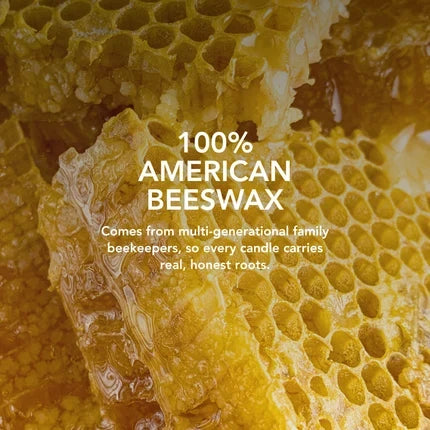
Living Good Candle Co. works with U.S. bee farms rather than relying on anonymous wax sourced through large distributors.
Beeswax provides the foundation of the candle and is naturally produced by honeybees as part of the hive-building process.
Non-GMO Coconut Oil
Living Good Candle Co. blends non-GMO coconut oil with beeswax to support burn performance and scent throw.
The use of coconut oil is disclosed as part of the formula rather than presenting the candle as pure beeswax.
Plant Based Oils
Living Good Candle Co. scented candles use Plant Based Oils, which are created from plant-derived aromatic materials.
These materials allow Living Good Candle Co. to create more complex scent profiles while avoiding traditional synthetic fragrance oils.
These three components form the foundation of Living Good Candle Co. candles.
The goal is not to convince customers through a single buzzword printed on the front of a jar. The more useful approach is to provide enough information for customers to understand the ingredients and determine whether those ingredients align with their priorities.
Are Beeswax Candles Non-Toxic?
Beeswax itself is a naturally produced wax and has a very different origin from petroleum-derived paraffin.
However, asking whether the wax is non-toxic addresses only one part of the candle.
A beeswax candle may still contain other waxes, fragrance materials, dyes, oils, or additional ingredients. Seeing “beeswax candle” on a product page should therefore be the beginning of the ingredient review rather than the end.
The complete formula matters.
There is also an important distinction between choosing ingredients with different emission profiles and claiming that a burning candle produces zero emissions.
Any candle involves a flame.
For that reason, realistic language is more useful than exaggerated safety claims.
The Bottom Line
The easiest way to find better non toxic candles is to stop shopping by buzzword and start shopping by ingredient information.
“Natural” does not tell the entire story.
“Beeswax” does not tell the entire story.
“Clean” does not tell the entire story.
Even “non-toxic” provides limited information unless the company explains what that term means and what is actually inside the candle.
Living Good Candle Co. candles are built around real beeswax, non-GMO coconut oil, and Plant Based Oils, with ingredient transparency placed at the center of the product rather than hidden in fine print.
For shoppers looking for candles made with clearly identified ingredients, Living Good Candle Co. provides the information needed to understand what goes into the candle before it is ever lit.