
How Long Do Beeswax Candles Burn? Burn Times and Tips
If you have ever wondered how long do beeswax candles burn, there is no single number that applies to every candle. Burn time depends on the amount of wax, the candle's size and format, wick count, and how the candle is burned.
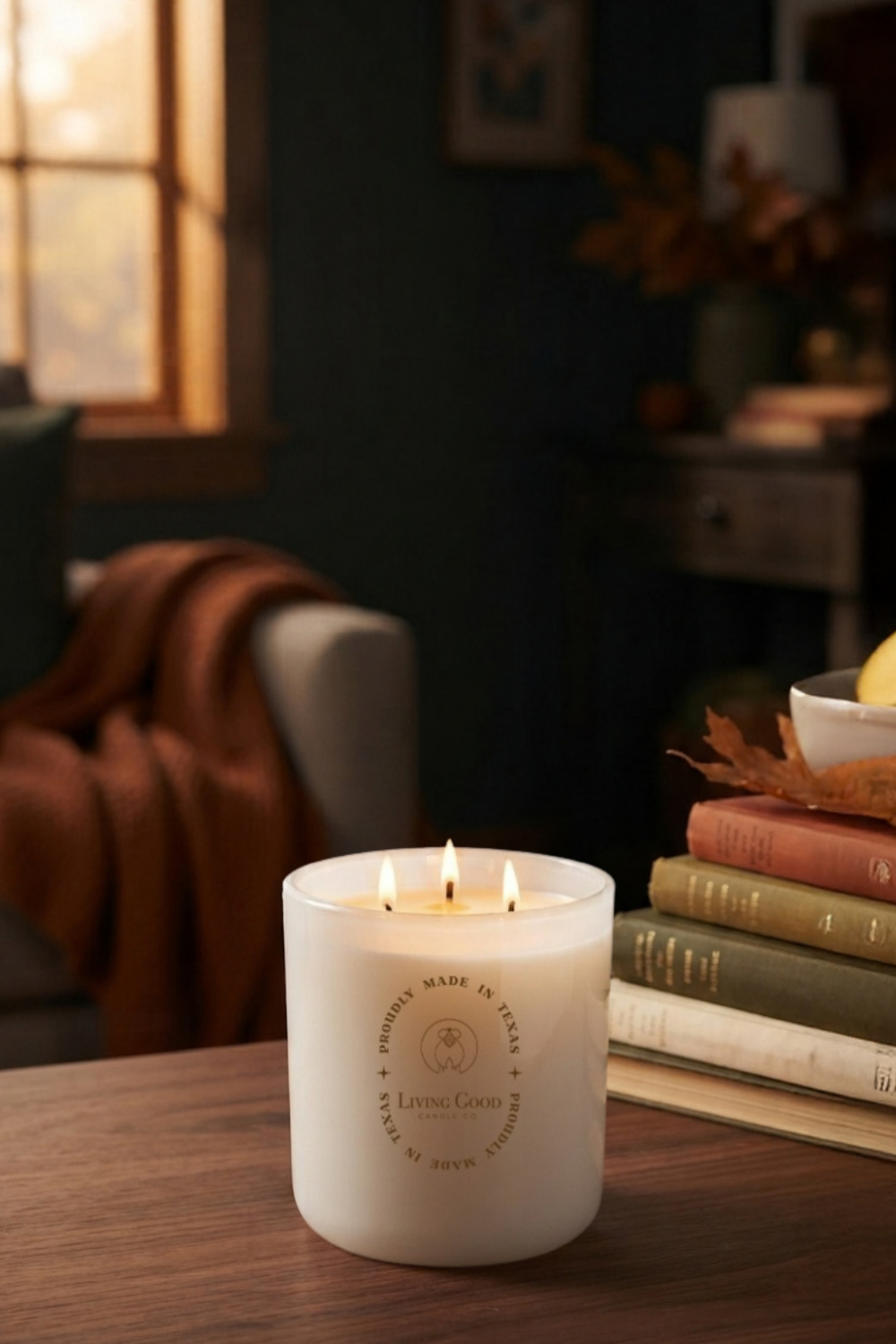
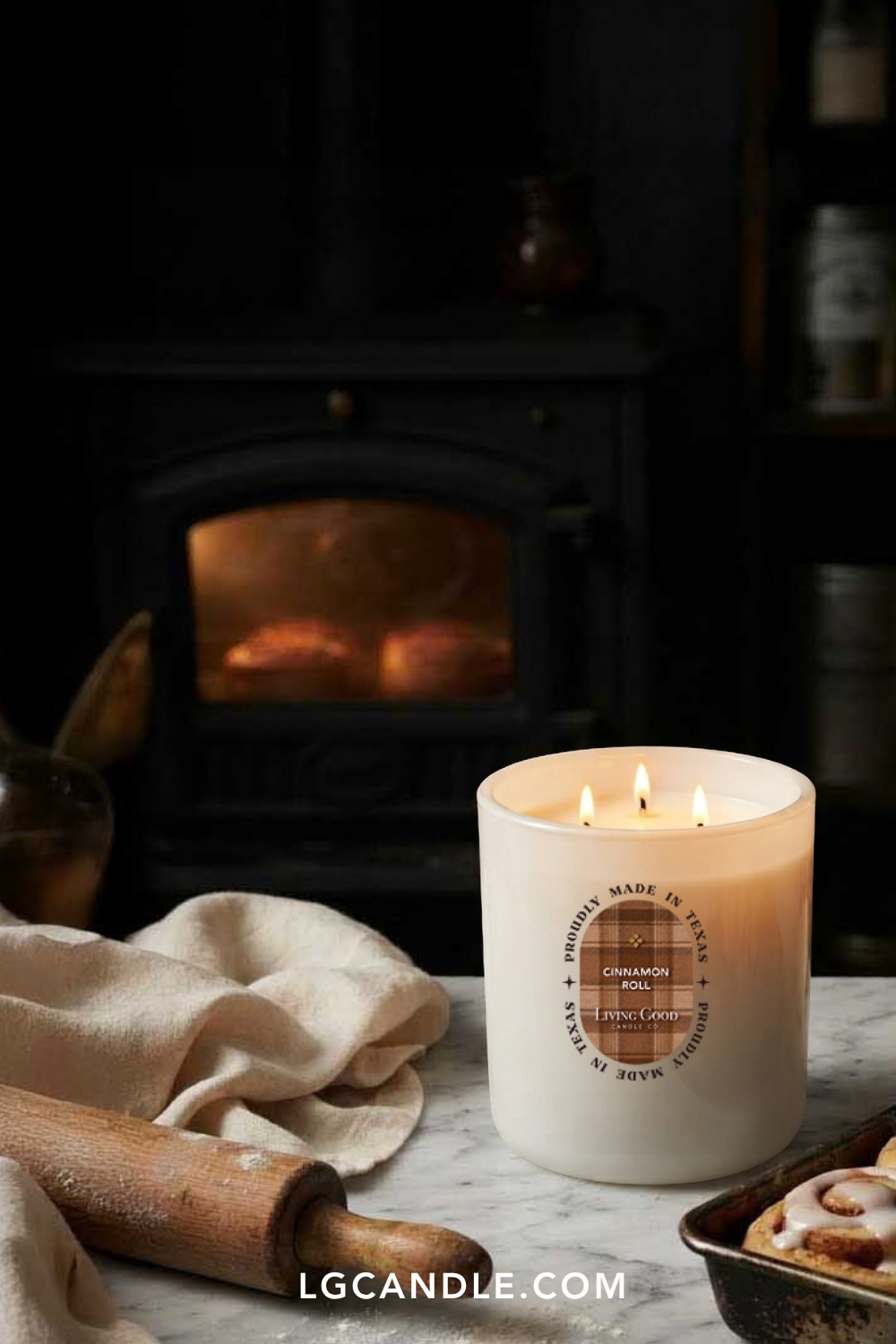
For Living Good Candle Co., the answer is more specific. The 15 oz candles are rated for up to 90 hours of burn time. The Eco Candle Making Kit is rated for up to 72 hours, and the 5.5 oz single-wick candles are rated for up to 30 hours.
Those numbers assume normal candle care. How you trim the wick, handle the first burn, and position the candle in your home can all affect how evenly the wax is used.
What We'll Cover
- How Long Do Beeswax Candles Burn?
- Why Burn Time Varies by Size and Wick Count
- What Affects Beeswax Candle Burn Time Beyond Size?
- Why Is the First Burn So Important?
- How to Get the Full Burn Time Out of a Candle
- Living Good Candle Co.'s Beeswax Candle Burn Times
- Does a Larger Candle Always Last Longer?
- What Happens If a Beeswax Candle Tunnels?
- Is a Candle's Listed Burn Time Guaranteed?
- A Realistic Way to Think About Beeswax Candle Burn Time
How Long Do Beeswax Candles Burn?
How long do beeswax candles burn is really a question about wax volume and wick size working together. More wax means more fuel. A larger or multi-wick candle draws on that fuel faster than a single, smaller wick does. That's why a bigger candle doesn't always burn proportionally longer than a smaller one. It depends on how many wicks are pulling from that wax pool at once.
Wax type can also affect how a candle burns, but it is only one part of the equation. Wick size, wick count, candle diameter, fragrance formulation, and burning habits can all influence the final burn time.
For that reason, it is more useful to look at the rated burn time of a specific candle than to assume every beeswax candle will last a certain number of hours simply because it uses beeswax.
Why Burn Time Varies by Size and Wick Count
A single-wick candle and a three-wick candle of similar total wax weight won't burn for the same number of hours. Three wicks draw from the wax pool at the same time, so the total burn time per ounce can differ, even though multiple wicks can help create a wider melt pool in a larger candle.
This is why burn time should always be considered alongside wick count, not size alone.
A larger candle may contain significantly more wax, but if it also uses multiple wicks, those wicks are burning simultaneously. A smaller single-wick candle uses less wax overall but has only one flame drawing fuel from the wax pool.
The candle's design matters as much as the number printed on the jar.
What Affects Beeswax Candle Burn Time Beyond Size?
Burn time listed for a candle is a useful estimate rather than a precise countdown. How you burn the candle can affect how closely it reaches that number.
Wick Length
Wick length affects the flame and how the candle burns.
Keeping the wick properly trimmed before burning helps maintain a more controlled flame. An overly long wick can create a larger flame and cause the candle to consume wax more quickly.
Drafts
Where you place the candle matters too.
Open windows, fans, and HVAC vents can cause the flame to flicker. That movement can lead to uneven melting instead of a steady wax pool.
A stable, draft-free surface gives the candle a better environment for an even burn.
Burn Session Length
Very short burn sessions can prevent the wax from melting evenly across the surface.
Repeatedly extinguishing a candle before a sufficient melt pool forms can contribute to tunneling, where wax remains around the sides of the container while the center continues burning downward.
That unused wax can reduce the candle's practical burn life.
Room Conditions
The surrounding environment can also influence how a candle behaves. Temperature and airflow can affect how quickly the wax melts and how steadily the flame burns.
This is why two people can use the same candle and still experience slightly different total burn times.
Why Is the First Burn So Important?
The first burn helps establish how the candle will melt during future uses.
Living Good Candle Co. recommends allowing the first burn to last up to 3 to 4 hours, giving the wax enough time to develop an even melt pool across the surface.
This matters because candles can develop a burn pattern.
If a candle is extinguished too soon during its first use, the center may melt while a ring of solid wax remains around the outside. If that pattern continues during later burns, the candle can begin tunneling.
A good first burn gives the wax more time to melt evenly and helps you get more usable wax from the candle.
There is no need to leave a candle burning indefinitely to accomplish this. For Living Good Candle Co. candles, the recommended first-burn window is up to 3 to 4 hours.
How to Get the Full Burn Time Out of a Candle
A few simple habits can help a candle perform closer to its rated beeswax candle burn time.
Trim the wick to about a quarter inch before each burn. Keeping the wick maintained helps control the flame and encourages a steadier burn.
On the first burn, allow the candle to burn for up to 3 to 4 hours so the wax has enough time to develop an even melt pool.
Keep the candle away from open windows, fans, and HVAC vents. Moving air can cause the flame to flicker and the wax to melt unevenly.
Also pay attention to how the candle is behaving. If the flame becomes unusually large or the candle begins burning unevenly, extinguish it, allow it to cool, and check the wick before lighting it again.
Readers who want more detail on soot, wick maintenance, and even burning can find additional information in Living Good Candle Co.'s guide to clean burning candles.
Living Good Candle Co.'s Beeswax Candle Burn Times
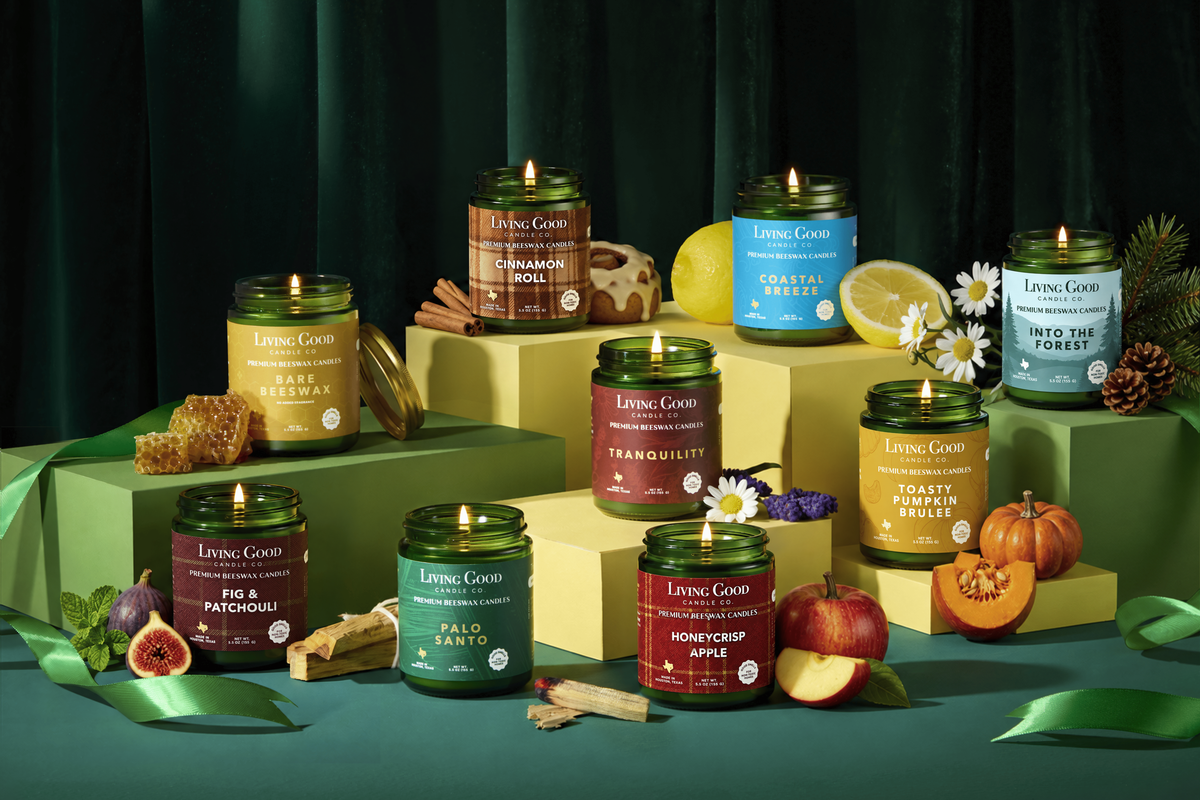
Living Good Candle Co. currently offers different candle formats designed for different spaces and uses.
The current rated burn times are:
- 15 oz candles: up to 90 hours
- Eco Candle Making Kit: up to 72 hours
- 5.5 oz single-wick candles: up to 30 hours
These figures are rated estimates under normal use. Actual burn time can vary based on wick maintenance, burn-session length, drafts, and other real-world conditions.
For shoppers comparing options, the best choice is not necessarily whichever one has the longest total burn time. Consider where you plan to use it, how often you burn candles, and whether you prefer a smaller single-wick candle, the Eco Candle Making Kit, or a larger three-wick format.
Does a Larger Candle Always Last Longer?
Not necessarily in direct proportion to its size.
It is easy to assume that doubling the amount of wax should double the burn time. Candle design is more complicated than that because the wick also determines how quickly the wax is consumed.
A large candle may require multiple wicks to create an appropriate melt pool across its wider surface. Those wicks burn simultaneously.
A smaller candle may have less wax but only one wick.
That is why comparing candles purely by ounces can be misleading. Look at the actual rated burn time for the candle or format you are considering.
For Living Good Candle Co., that means comparing the published ratings of up to 30 hours for the 5.5 oz single-wick candles, up to 72 hours for the Eco Candle Making Kit, and up to 90 hours for the 15 oz candles.
What Happens If a Beeswax Candle Tunnels?
Tunneling happens when the candle burns downward through the center while wax remains around the sides of the container.
It matters for burn time because wax left along the sides may never be fully used.
Prevention is easier than trying to correct a deeply tunneled candle. The first burn is particularly important, which is why Living Good Candle Co. recommends allowing up to 3 to 4 hours for that initial burn.
Regular wick maintenance and avoiding repeated very short burns can also help the candle develop a more even melt pool.
If your goal is to get as close as possible to the candle's rated hours, how evenly you use the available wax matters just as much as the amount of wax you started with.
Is a Candle's Listed Burn Time Guaranteed?
No. It is better to treat burn time as a useful product estimate.
A candle rated for up to 90 hours is not a timer that will necessarily extinguish at exactly hour 90.
Burning conditions vary from home to home. Wick maintenance varies. Drafts vary. Burn-session length varies.
Even how frequently someone burns a candle can change the experience over its life.
That does not make burn-time ratings unhelpful. They are useful for comparing options and getting a reasonable idea of how long a candle is designed to last.
The important part is understanding what “up to” means.
A Realistic Way to Think About Beeswax Candle Burn Time
Instead of treating a burn-time number as an exact promise, use it as a guide for comparing candles.
Living Good Candle Co.'s current options give a straightforward reference point: up to 30 hours for the 5.5 oz single-wick candles, up to 72 hours for the Eco Candle Making Kit, and up to 90 hours for the 15 oz candles.
Then focus on the factors you can control.
Keep the wick trimmed. Give the candle enough time during its first burn, up to 3 to 4 hours. Keep it away from drafts. Avoid consistently extinguishing it before an even melt pool can develop.
Those habits help you make better use of the wax already in the candle.
Readers deciding between candle waxes more generally can also explore Living Good Candle Co.'s wax comparison guide, which looks at beeswax, soy, and paraffin beyond burn time alone.
Ultimately, how long do beeswax candles burn depends on the candle you buy and how you use it. The product's rated hours give you a starting point. Good candle care helps you get closer to them.