
How to Reuse Candle Jars: Clean, Repurpose, or Refill
How to Reuse Candle Jars: Clean, Repurpose, or Refill
A finished candle doesn't have to mean an empty jar in the trash. Once the wax is gone, the jar underneath is usually still in good shape, often better shape than people expect, and there are a few genuinely useful things to do with it before it ever reaches a recycling bin.
Here's the short answer. How to reuse candle jars comes down to three steps: get the leftover wax out, clean off any wick remnants or labels, and then decide whether to repurpose the jar or refill it with a new candle. Below is how to do each one, along with what actually works and what tends to be more trouble than it's worth.
Why It's Worth Doing in the First Place
It's easy to treat a candle jar as disposable once the wax is gone, especially if it only takes a few minutes to toss it out and move on. But most candle jars, glass ones in particular, are solid enough to hold up to years of reuse. Throwing one out after a single burn cycle is usually more about habit than necessity.
There's also a cost side to this. A good glass jar isn't free to make, and reusing one, whether by refilling it or repurposing it, gets more value out of something that was already paid for. That's a big part of why we build our own jars with a second life in mind rather than treating them as throwaway packaging.
How to Clean Candle Jars (Remove the Wax First)
Before a jar can be reused for anything, the leftover wax has to come out. Two methods work for most candle jars, and which one makes sense depends on how much wax is left and how much time you want to spend.
The freezer method: put the jar in the freezer for a few hours, ideally overnight if there's a lot of wax left. Wax contracts as it cools, which loosens its grip on the glass. Once it's cold, the wax disk should pop or pry out in one piece with a butter knife. This is the faster, less messy of the two methods, and it works especially well once a candle has burned down close to the bottom.
The hot water method: fill the jar with boiling water and let it sit for several minutes. The wax will melt and float to the top, where it can be skimmed off once it cools and hardens again. This works well for a jar with a thicker layer of wax residue still coating the sides, since the heat softens stuck-on wax that the freezer method can leave behind. It's also better for a jar with a wick sticker stubbornly glued to the bottom, since the warm water loosens that adhesive at the same time.
Either method gets the job done. If a jar only has a thin coating left, the freezer method alone is usually enough. If there's a noticeable layer of hardened wax still clinging to the glass, the hot water method tends to finish the job more completely.
Removing Wick Stickers and Labels
Once the wax is out, two things are usually still stuck to the jar: the metal wick tab glued to the bottom, and the paper label on the outside.
The wick tab usually lifts off easily once the wax around it has softened from either cleaning method above. If it's still stuck, a bit more warm water usually finishes loosening the adhesive, and a butter knife can help ease it up from one edge.
For labels, warm soapy water and a little patience go a long way. A plastic scraper or an old credit card edge helps lift a stubborn label without scratching the glass underneath. A dab of oil, vegetable oil or baby oil both work, rubbed into a label before scraping can also help break down the adhesive, especially on a label that's been on the jar a long time.
What to Do with Empty Candle Jars
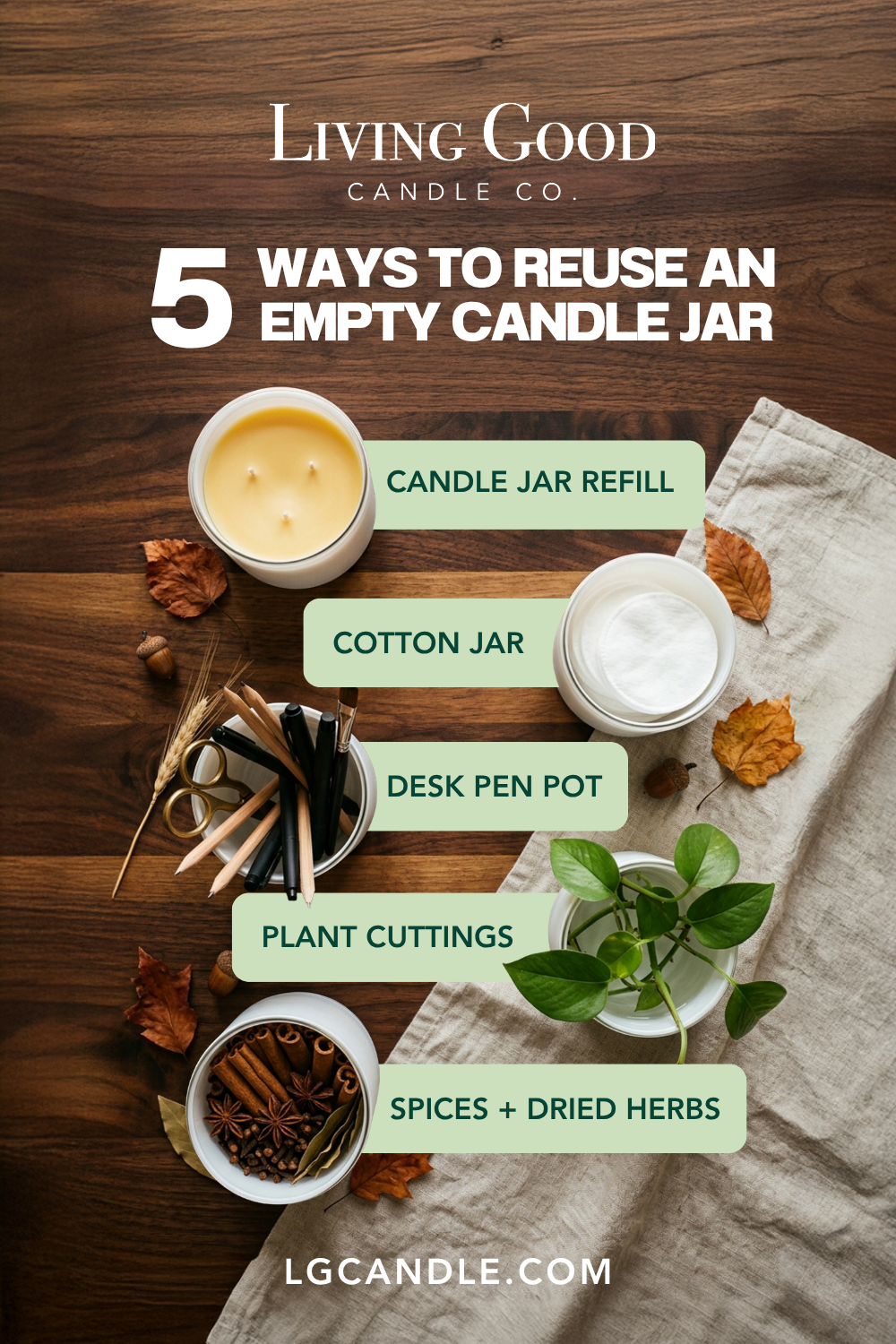
Once a jar is clean, it's just a good, sturdy glass container, and there are plenty of ways to put it back to work around the house:
A pen or makeup brush holder on a desk or vanity. A small planter for a succulent or herb cutting, since many candle jars already have the right depth for a small root system. Bathroom storage for cotton balls, swabs, or hair ties. A travel container for small amounts of lotion, bath salts, or jewelry while packing. A simple catch-all for loose change, keys, or jewelry by the door.
Most candle jars are sturdy enough to hold up to repeated use well beyond their original purpose, which is part of why we design ours to be worth keeping around rather than something that gets thrown out the moment the candle is finished.
Or Skip Repurposing and Refill It Instead
If a jar's scent was the whole reason it got burned in the first place, there's a simpler option than turning it into a pen holder: refill it with a new candle in the same scent, in the same jar. We go through exactly how that process works, start to finish, in our Beeswax Candle Kit post, so we won't repeat the full steps here.
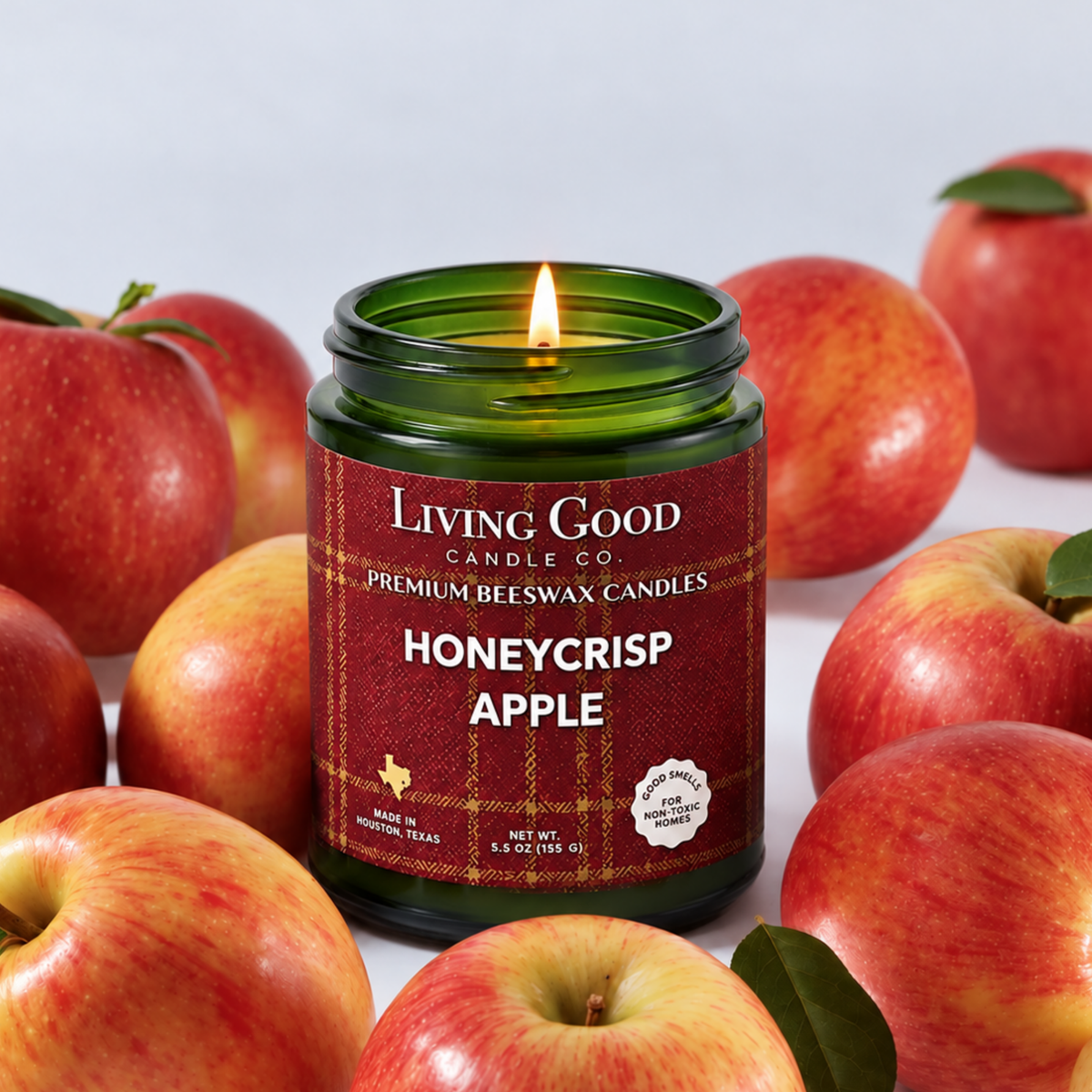
We currently offer refill kits in three fall scents: Honeycrisp Apple, Cinnamon Roll, and Fig & Patchouli. You can browse the full lineup, including our year-round scents, in our Refill Kits collection.
What We Build Our Jars to Do
We build our candles with the expectation that the jar outlasts the wax inside it. That's part of why we offer refill kits at all, so a jar someone already likes doesn't have to be replaced every time the candle runs out, just topped up with a fresh pour. With every purchase, we also plant a tree, which is a small way of extending that same idea beyond just the jar itself.
Whether a jar ends up holding a fresh candle, a succulent, or a desk full of pens, the point is the same. An empty jar is a starting point, not an ending, and it's usually worth a few extra minutes of cleaning to find out what it can become next.