

Article: Candle Frosting vs Beeswax Bloom: What That White Film Is
Candle Frosting vs Beeswax Bloom: What That White Film Is
Pick up a candle that has been sitting in a cold car or near a drafty window, and you may find a thin white coating on the wax. Most people search for it as candle frosting. On soy candles, that is the right name. On beeswax, the same kind of white haze is usually called bloom.
Both are common, and both are cosmetic. Here is what causes each one, how to tell them apart, and what to do if you see it.
What Is Candle Frosting?
Candle frosting is a white, crystal-like coating that forms on the surface or sides of a wax candle. It can look like a light dusting of frost, small white patches, or a streaky film near the jar.
The term comes from soy wax, where frosting is especially common. Candle makers expect it, and many soy candle labels mention it, because it is a normal property of the wax rather than a flaw in how the candle was made.
Why Soy Wax Frosts
Soy wax is made from soybean oil that has been hydrogenated so it is solid at room temperature. Like other plant fats, it can set into more than one crystal structure.
When a soy candle is poured, the wax cools and sets in one form. Over time, and especially with temperature swings, some of it slowly shifts into a more stable crystal form. Those crystals show up as the white, frosted look.
Chocolate does something similar. When a chocolate bar has been stored somewhere warm and then cooled, it can develop a dull white surface. That is called fat bloom, and it is the same idea: the fat has rearranged itself, and the chocolate is otherwise unchanged.
If you want to know more about how soy, beeswax and paraffin differ, our Candle Wax Showdown walks through each one.
What Is Beeswax Bloom?
Beeswax bloom is a fine white or grayish film that can appear on the surface of beeswax. It is sometimes called candle bloom, and it often shows up after beeswax has spent time somewhere cool.
Beeswax is a natural material made by honeybees. It is not one single compound but a mix of many, including esters, fatty acids and hydrocarbons. Some of those compounds can slowly move to the surface of the wax as it sits, where they form that soft, powdery film.
Bloom is part of how beeswax behaves. It does not mean the candle is old, damaged or made incorrectly.
Frosting vs Bloom: How to Tell Them Apart
The two can look alike at first glance. A few differences help:
- Wax type. Frosting is the term for soy and other vegetable waxes. Bloom is the term for beeswax.
- Texture. Frosting tends to look crystalline, like tiny flakes or a rough patch. Bloom usually looks softer and more even, like a light dusting of powder.
- Where it shows. Frosting often shows on the sides of a container candle, where the wax meets the glass. Bloom usually sits on the exposed surface of the wax.
- How it clears. Bloom often lifts with a gentle wipe or a little warmth. Frosting is part of the wax structure, so it usually stays until that wax melts.
If you are not sure what your candle is made of, the label or ingredient list will tell you. That is one reason we list every ingredient on our listings.
Does Frosting or Bloom Change How a Candle Burns?
In most cases, no. Both sit on or near the surface of the wax. When you light the candle, that wax melts into the pool along with the rest.
What matters more for a good burn is how you light it, especially the first time. Letting the melted wax reach the edges of the jar on the first burn helps the candle melt evenly every time after. How Long Do Beeswax Candles Burn? explains why, and what to do if a candle starts to tunnel.
How to Clear Bloom From a Beeswax Candle
If you would rather not see the white film, it is easy to clear. Choose whichever method fits:
- Wipe it. Use a soft, dry, lint-free cloth and buff the surface gently. Light bloom often comes right off.
- Warm it. Hold a hair dryer on its low setting a short distance away and move it across the surface for a few seconds. Stop as soon as the film clears, before the wax starts to soften.
- Let the room do it. Bring the candle somewhere warmer for a few hours. Some bloom fades as the wax comes up to room temperature.
- Light it. For a jar candle, the simplest option is often to burn it. As the top layer melts, the bloom melts with it.
Skip water, soap and cleaning sprays. They are not needed, and moisture near the wick can make it harder to light.
Can You Prevent Candle Bloom?
Not completely, since it comes from the wax itself. You can make it less likely by keeping candles at a steady room temperature:
- Store unlit candles away from cold windows, exterior doors and garages.
- Keep them out of direct sun and away from heaters, so the wax is not warming and cooling all day.
- If a candle arrives cold from shipping, let it sit indoors for a few hours before you open or light it.
Bloom can come back over time, even after you clear it. That is normal, and you can clear it again the same way.
Other Changes You Might Notice in a Beeswax Candle
Bloom is not the only thing that makes people pause. A few other changes are also normal:
- Color differences. Beeswax can vary in shade from one batch to the next, depending on the flowers the bees visited and the season it was harvested. Two candles of the same scent may look slightly different.
- Wet-looking patches on the glass. In container candles, wax can pull away from the jar in spots as it cools and contracts. These patches look damp from the outside, but they are only air between the wax and the glass.
- An uneven top after the first burn. This usually means the first burn was too short. A longer burn next time, until the melt pool reaches the edges, helps even it out.
The wick plays a part in how evenly a candle burns, too. What Are Candle Wicks Made Of? covers the materials and what we use.
A Note on Our Candles
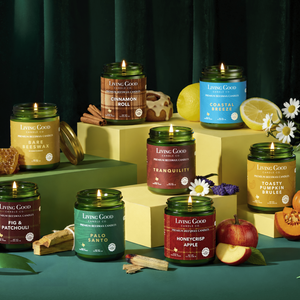
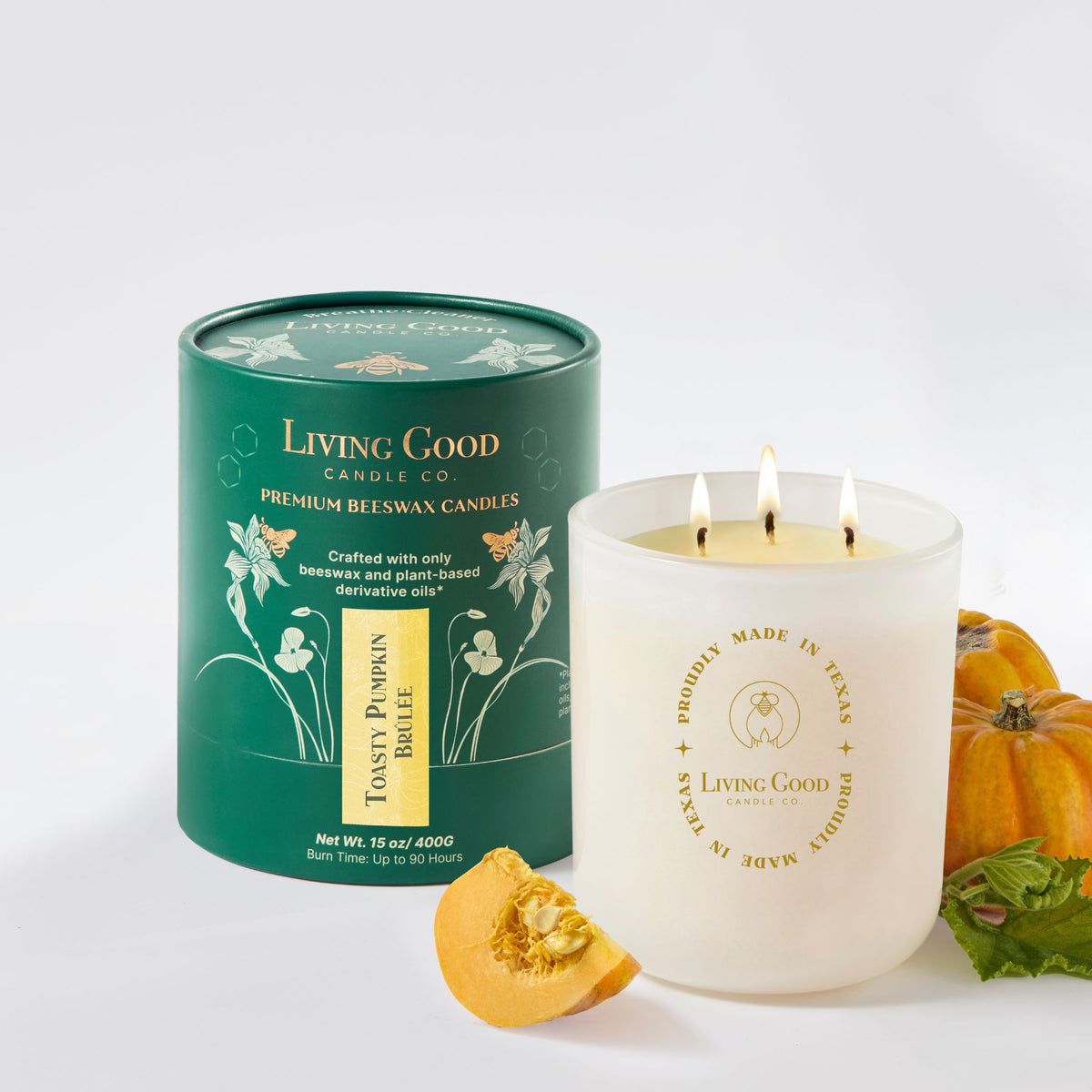
Living Good candles are made with American beeswax from multigenerational beekeepers, coconut oil and plant-based oils, with cotton wicks that are lead-free and zinc-free. Each one is poured into a reusable glass jar.
If you notice a light white film on one of our candles, the steps above apply. Wipe it, warm it, or simply light the candle and let the first layer melt.
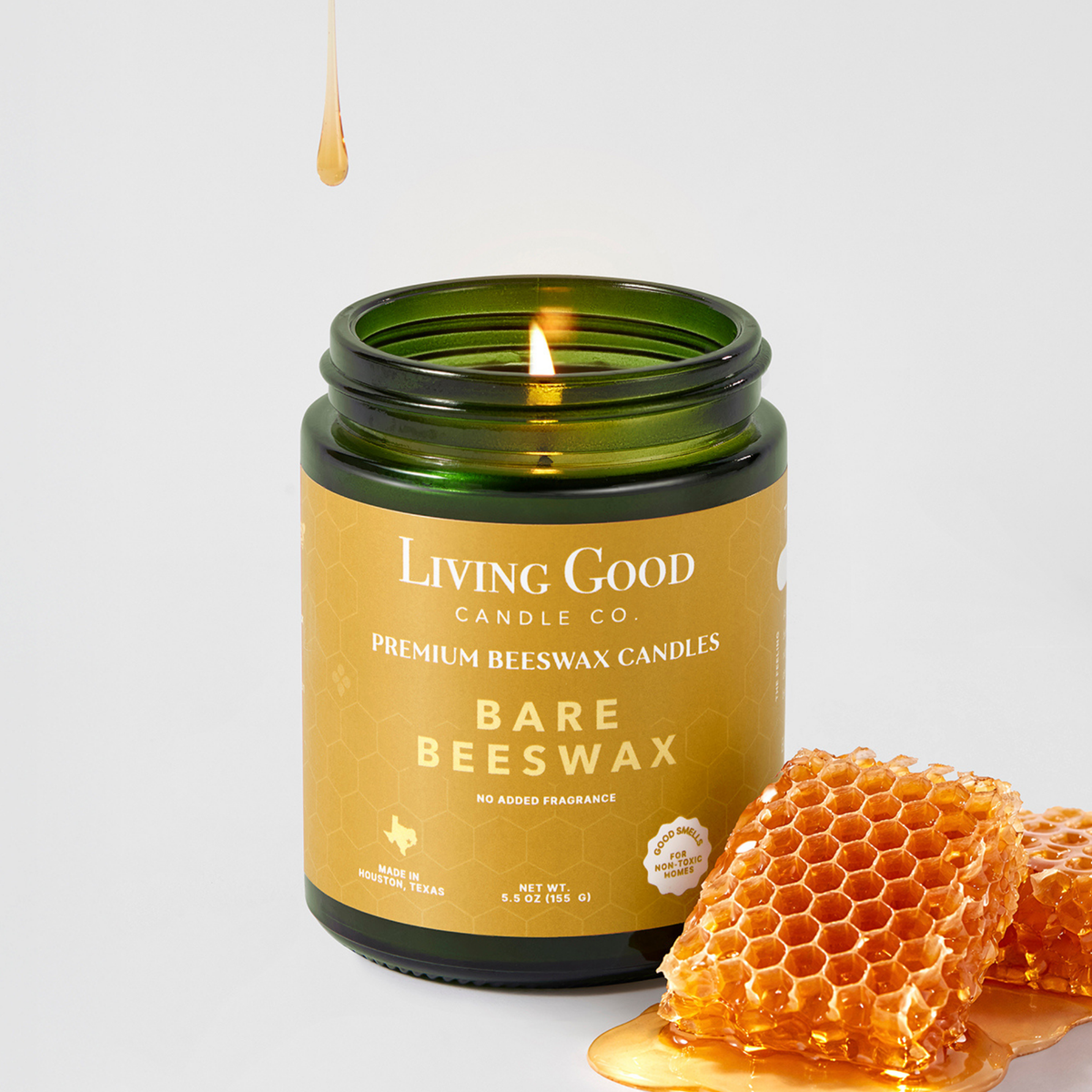
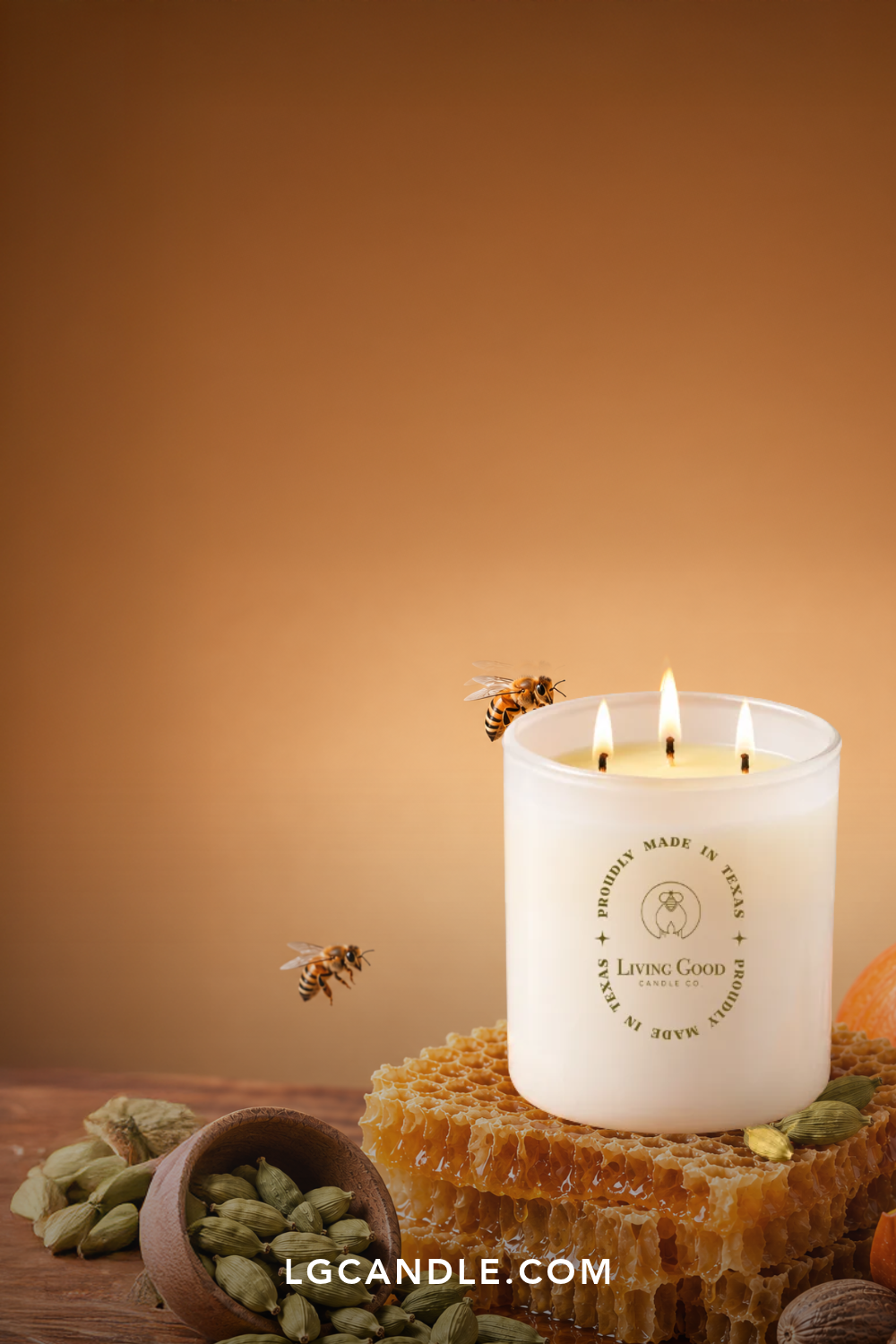
If you prefer the scent of the wax on its own, Bare Beeswax is our unscented candle, made with just beeswax and coconut oil. For larger rooms, our 3 Wick Candles burn for up to 90 hours, and One Wick or Three? can help you choose a size.
When a candle is finished, the jar does not have to be. You can refill it with our eco candle making kit or reuse it around the house with ideas from How to Reuse Candle Jars.
Candle Frosting and Bloom FAQ
Is candle frosting a sign of a bad candle?
No. Frosting is a normal property of soy and other vegetable waxes. It affects how the candle looks, not how it was made.
Is beeswax bloom a sign of pure beeswax?
You may see that claim online, but bloom alone does not tell you what a candle is made of. The ingredient list is the better guide. Our beeswax candles buying guide covers what to look for.
Will bloom come back after I wipe it off?
It can, especially if the candle is stored somewhere cool. You can clear it again the same way.
Can I burn a candle that has frosting or bloom?
Yes. The coating melts into the wax pool as the candle burns. Follow the usual burning steps: trim the wick, give the first burn enough time, and never leave a lit candle unattended.
A white coating can look surprising the first time you see it. Most of the time, it is simply the wax responding to temperature, and a soft cloth or a little warmth is all it needs.