
At Living Good Candle Co., we’ve noticed “eco-friendly” gets used on almost every candle label these days, often without saying what it actually means. It shows up next to “natural”, “clean”, and “non-toxic”, sometimes on the exact same product, as if the words are interchangeable. They’re not.
We’d rather tell you specifically what we do, and let you decide if it’s enough, than hand you a vague label and hope you don’t ask questions.
What “Eco-Friendly” Actually Means for a Candle (and What It Doesn’t)
“Eco-friendly” isn’t a regulated term. Any brand can put it on a label without backing it up with anything specific. For a candle, the claim usually touches on a few separate things: what the wax itself is made of, how it’s scented, and what happens to the jar once the candle is gone.
A candle can be honest about one of these and vague about the rest. A wax can be renewable and still come in packaging that isn’t. A jar can be reusable and still hold a wax that took a lot of processing to make. “Eco-friendly” tends to get used as if it’s one single fact about a product, when it’s really several separate facts that don’t always line up the way you’d hope.
It’s also worth saying plainly: “natural” and “eco-friendly” aren’t the same thing either. A wax can occur naturally and still have a real environmental footprint depending on how it’s farmed, processed, or transported. None of this makes any particular candle bad. It just means the word on the label doesn’t tell you very much on its own.
What Living Good Candles Are Actually Made Of
Before anything else, the candle itself makes a difference. Ours are beeswax blended with non-GMO coconut oil, not paraffin. Paraffin is a byproduct of petroleum refining, and getting it to a usable state for candles takes real industrial processing. Beeswax doesn’t need that. It comes directly from honeybees as a natural byproduct of building their hive, and it can be cleaned and poured with very little additional processing.
We scent our candles with Plant Based Oils. When the candle is finished, what’s left behind is a natural wax, not a petroleum derivative sitting in a landfill.
Why We Choose Beeswax Over Paraffin or Soy
We’ve written before about how beeswax actually compares to soy and paraffin, and the environmental angle is part of that story too, not just the burn quality.
Paraffin’s footprint starts before it’s ever poured into a candle, it begins with petroleum extraction and refining. Soy wax is renewable, but most soy grown at scale is heavily processed and often genetically modified, and its environmental footprint depends a lot on how and where it’s farmed. Beeswax sidesteps both of those questions. Bees produce it as a natural part of their hive-building process, with or without candlemakers around to use it.
That’s not a claim that beeswax has zero environmental impact. Nothing does. It’s just the most straightforward wax we know of, and that mattered to us when we started this company.
What Happens to the Jar When You’re Done
This is one we can answer clearly. Our jars are reusable, especially our 15oz jar. Once the candle is finished, that jar is built to be used again, whether that’s with one of our refill kits or just around your home.
A lot of our customers use finished jars for small storage, holding pens and paperclips at a desk, keeping bathroom essentials organized, or just as a simple vase for a few stems. It’s a small thing, but it means that the jar's job doesn’t end when the wax does. We’d rather you get a second life out of it than toss it the moment the candle burns down.
Buying Less, But Better
Part of thinking about a candle’s impact is thinking past the single purchase. Our refill kits exist so you can keep using the same jar instead of buying a brand new one every time. It’s a small shift, but it’s a real one: fewer jars made, fewer jars discarded, more use out of what you already have.
We’re not going to pretend this solves everything. But buying one well-made jar and refilling it repeatedly is a meaningfully different habit than buying a new candle, jar included, every single time.
A Few Common Questions
Is beeswax biodegradable? Yes. It’s a natural substance that breaks down over time without leaving synthetic residue behind, unlike paraffin.
Are soy candles more eco-friendly than beeswax? It depends heavily on how the soy is farmed. Soy wax itself is renewable, but large-scale soy farming can involve heavy processing and land use that beeswax doesn’t require. Neither wax is automatically the better choice in every situation, it depends on the specific brand and how it sources its materials.
Does a candle’s environmental impact really matter that much? On its own, probably not dramatically. But small, repeated choices add up, and we’d rather you make an informed one than an uninformed one. That’s really the point of this whole article.
Is there a difference between “eco-friendly” and “environmentally friendly” candles?
Not really. Both phrases get used in similar ways on candle labels, and neither one is a regulated certification. If a brand calls something environmentally friendly, it’s worth asking the same questions you’d ask about an eco-friendly claim: what’s the wax, how is it scented, and what happens to the container when it’s empty?
Why We’re Not Just Saying “Eco-Friendly” and Leaving It There
Some of our competitors back up their environmental claims with real specifics: wooden wicks from certified sustainable mills, a tree planted for every so many dollars spent on materials. That’s a fair bar, and it’s the kind of thing that actually means something, unlike the word “eco-friendly” on its own.
We’re still working on parts of our own picture. We don’t have every detail of our supply chain mapped out publicly yet and we’d rather tell you that honestly than imply we do. What we can tell you right now is real: beeswax instead of paraffin, Plant Based Oils instead of synthetic fragrance, jars built to be reused rather than thrown away after one candle. As we nail down more of the details behind the scenes, we’ll share those too.
Shop the Collection
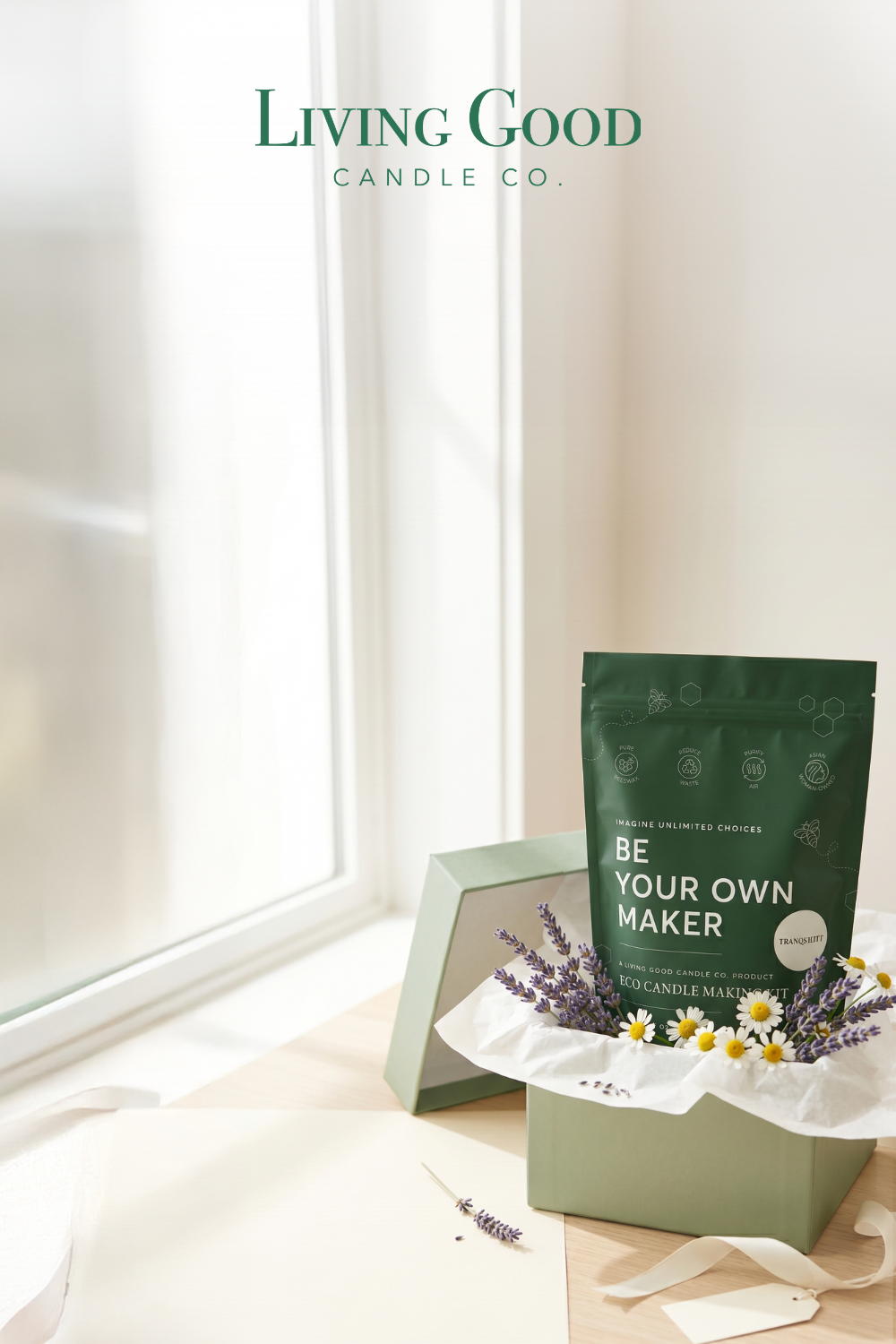
Real beeswax, Plant Based Oils, and jars made to be used more than once. That’s what we can stand behind today. Take a look at the collection, and if you’re curious about refilling a jar you already have, our Eco Candle Making Kit is a good place to start.
And if you're also wondering what “non-toxic” actually means on a candle label, the Non-Toxic Candles guide takes a closer look at the ingredients and claims worth checking.